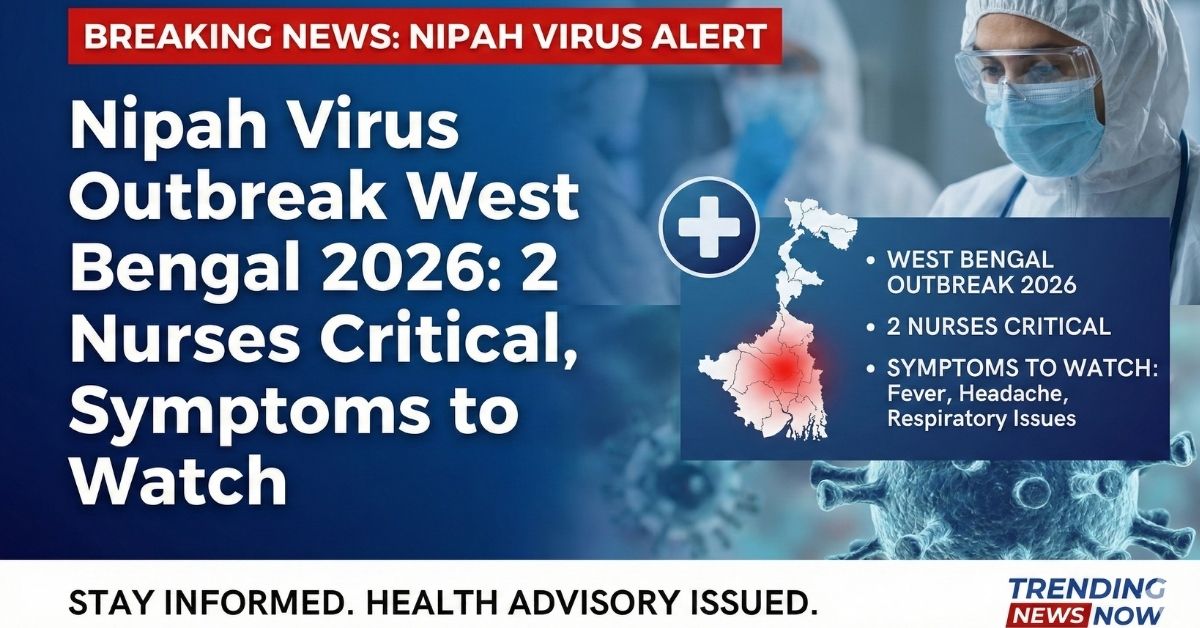
For the first time since 2007, the Nipah Virus (NiV) has been detected in West Bengal. Two healthcare workers (nurses) are currently fighting for their lives in a private hospital in Barasat, North 24 Parganas.
This development is deeply concerning because the Nipah virus is known for its high death rate and lack of a specific cure. The Union Health Ministry has already deployed a central team to the state, and contact tracing has begun in three districts.
Here is everything you need to know about this sudden outbreak, the symptoms to watch for, and how to stay safe.
What Has Happened? (January 2026 Update)
On January 12, 2026, samples from two nurses working in a hospital in Barasat tested positive for the Nipah virus.
- Confirmation: The samples were first tested at AIIMS Kalyani and later confirmed by the National Institute of Virology (NIV), Pune.
- Current Status: Both patients are reportedly in a “very critical” condition and are on ventilator support. One of them is in a coma.
- The Source: Authorities suspect the infection might have spread through human-to-human transmission or consumption of contaminated date palm juice, but the exact source is still under investigation.
Nipah Virus Symptoms: What to Watch For
The user’s primary concern is symptoms. Nipah symptoms can appear 4 to 14 days after exposure.
1. Early Symptoms (Flu-like)
- High Fever: Sudden rise in body temperature.
- Headache: Severe, throbbing pain.
- Muscle Pain (Myalgia): Body aches and extreme weakness.
- Sore Throat: Difficulty in swallowing.
- Vomiting: Nausea and stomach upset.
2. Severe Symptoms (Emergency Phase)
If not managed early, the virus attacks the brain (Encephalitis).
- Dizziness & Drowsiness: The patient may feel confused or sleepy.
- Altered Consciousness: Slurred speech or confusion about time and place.
- Acute Respiratory Distress: Severe trouble breathing.
- Seizures & Coma: In severe cases, the patient may suffer convulsions and slip into a coma within 24–48 hours.
Why Is This Outbreak Serious?
This news is alarming for two reasons:
- The 19-Year Gap: West Bengal last saw a Nipah outbreak in 2007 (Nadia district). Its return suggests the virus is still circulating in local fruit bats.
- High Mortality: Nipah virus has a death rate ranging from 40% to 75%, making it much deadlier than COVID-19.
Government Action & Helplines
The West Bengal government and the Centre have launched a coordinated response:
- Contact Tracing: Health teams are tracking everyone who came in contact with the two nurses in North 24 Parganas, Purba Bardhaman, and Nadia.
- Helplines: The state has launched emergency numbers: 033-23330180 and 9874708858.
- Isolation Wards: Special wards have been readied at the Infectious Diseases and Beliaghata General Hospital (ID&BG) in Kolkata.
Prevention Tips
Since there is no vaccine, prevention is your only defense.
- Avoid Raw Date Palm Juice: Do not drink fresh date palm sap (khejur ras) as it may be contaminated with bat saliva or urine.
- Wash Fruits: Thoroughly wash all fruits before eating; avoid fruits with bite marks.
- Mask Up: If you are visiting hospitals or crowded areas in affected districts, wear a mask.
Frequently Asked Questions (FAQs)
Q: Is there a cure or vaccine for Nipah Virus?
No. Currently, there is no specific medicine or vaccine for Nipah Virus. Treatment is mostly “supportive care,” meaning doctors treat the symptoms (like fever and breathing trouble) to help the body fight the virus.
Q: How does Nipah spread?
It spreads from animals to humans (zoonotic), usually through fruit bats or pigs. It can also spread from human to human through close contact with body fluids (blood, saliva) of an infected person.
Q: Is Nipah airborne like COVID-19?
Nipah is not airborne over long distances like COVID-19. It spreads through droplets and direct contact. You generally need to be very close to an infected person or animal to catch it.
Q: Which districts in West Bengal are on alert?
Currently, North 24 Parganas, Purba Bardhaman, and Nadia are on high alert due to the movement history of the infected patients.
Q: Can I eat chicken or mutton?
Yes. Nipah is primarily linked to fruit bats and sometimes pigs. There is no evidence connecting it to poultry (chicken) or mutton.